CHANGZHOU WUJIN NEW STAR CLOTHING CO.,LTD

Kitchen Aprons: A Sourcing Guide for OEM and Private Label Buyers
Kitchen aprons may appear to be a straightforward textile product, but bulk sourcing involves more decisions than choosing a color or pattern. Importers, retailers, distributors and private-label brands need to consider intended use, dimensions, material requirements, fit, construction, appearance, branding and packaging before comparing supplier quotations.
A quotation based only on the words kitchen aprons leaves too many variables undefined. Different markets and applications may require different configurations, and even small changes to construction or customization can affect the final product.
A better sourcing process begins with the intended user and sales channel, followed by a clear product specification.
Define Where the Kitchen Apron Will Be Used
The intended application should guide the specification.
An apron intended for household cooking may have different requirements from one developed for food service, hotel use, promotional programs or retail kitchenware collections.
Before contacting a supplier, buyers should identify:
– Intended user
– Application environment
– Target market
– Required quantity
– Preferred overall dimensions
– Required coverage
– Material preference if already specified
– Design or visual requirements
– Branding requirements
– Packaging format
When this information is unclear, suppliers may quote products with different constructions, making direct price comparison difficult.
Kitchen Apron Size: What Buyers Need to Confirm
Size affects both appearance and practical coverage.
Instead of asking whether an apron is standard size, specify the dimensions required for the target product. If an existing item is being reproduced, send a physical sample, drawing or complete measurement information.
Relevant dimensions may include the overall body size and any other dimensions that affect fit or coverage.
For custom products, the final dimensions should be confirmed in the approved specification or sample.
Do not estimate dimensions from a catalog photo. Product photography can show shape and style, but it does not provide a reliable scale.
Material Selection Should Follow the Product Requirement
Kitchen aprons can be developed for different markets and uses, so material should be treated as a specification rather than an assumption.
A buyer may already have a required material, or the requirement may still need to be developed with the supplier. In either case, the material for the final product should be recorded clearly.
Questions to confirm include:
– What material is required?
– Is a particular feel or appearance expected?
– Are there specific functional requirements?
– How will the product be cleaned or maintained?
– Does the target market require particular documentation?
– Does the design involve printing or other customization?
If a functional characteristic is required, it should be confirmed for the selected construction. Do not assume that a function applies to every apron simply because another product uses a similar material.
Fit and Construction Affect the User Experience
The practical design of an apron involves more than its printed surface.
Buyers should examine how the apron sits on the body, how easily it can be adjusted or worn and whether its coverage matches the intended use.
When evaluating samples, consider:
– Overall fit
– Coverage
– Ease of wearing
– Adjustment method where applicable
– Construction consistency
– Stitching appearance
– Placement of customized elements
– General finish
These points are easier to judge from a physical sample than from a digital image.
Planning Kitchen Aprons for Retail Collections
For importers and retailers, kitchen aprons may form part of a wider kitchen textile collection rather than being purchased as an isolated item.
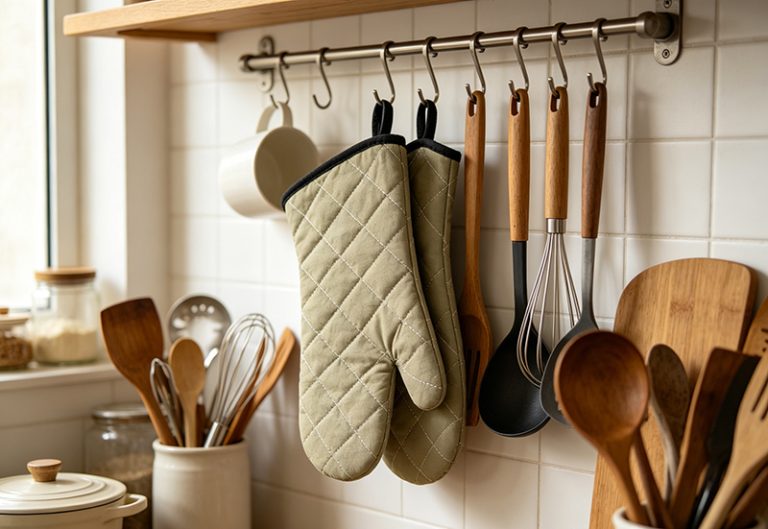
Changzhou Wujin Xinxing Garments Co., Ltd. produces heat-protective kitchen textiles and related household products, including protective aprons, oven gloves and other textile items.
When planning a coordinated range, buyers can define the desired product combination first and then discuss whether the design direction, customization and packaging should be coordinated across the collection.
This can be more efficient than developing each item without a common specification.
OEM and ODM Requirements Should Be Defined Early
Changzhou Wujin Xinxing Garments Co., Ltd. provides OEM and ODM services. For a customized apron project, buyers should distinguish between requirements that are already fixed and items that still need development.
Fixed requirements may include dimensions, quantity or an approved design. Other aspects may require supplier evaluation.
The earlier these requirements are separated, the easier it becomes to manage sampling and quotation.
OEM Project Checklist
– Product type
– Intended application
– Required quantity
– Target dimensions
– Material requirement
– Functional requirements
– Design reference
– Branding requirements
– Packaging expectations
– Target market
– Existing sample if available
If a specification is not yet confirmed, mark it clearly instead of providing an estimated value that may later change.
Why Sample Approval Matters
Sample approval gives both buyer and supplier a physical reference for the intended product.
During sample review, buyers should evaluate more than visual appearance. Dimensions, fit, construction, finishing and customization details should also be checked.
Any requested changes should be recorded clearly before the next sample or production stage.
This reduces the risk of situations where the buyer and supplier are discussing the same product name but working from different assumptions.
Common Purchasing Mistakes
Requesting a quote using only a product photo
A photo cannot define dimensions, material, construction and packaging requirements.
Comparing prices before specifications
Two apron quotations may not represent equivalent products.
Assuming a standard size will fit every market
The required dimensions should be based on the actual target product and users.
Leaving customization details until the end
Branding, design and packaging requirements should be discussed before the final quotation and production confirmation.
Copying specifications from another product
A specification should apply to the selected product, not be transferred automatically from an unrelated apron or project.
FAQ
What information should I provide when requesting kitchen apron prices?
Provide the quantity, intended use, dimensions, material requirements, design reference, customization needs, packaging expectations and target market.
Can kitchen aprons be customized for private-label projects?
Changzhou Wujin Xinxing Garments Co., Ltd. provides OEM and ODM services. The exact customization requirements should be reviewed according to the selected product and project.
How should buyers confirm apron dimensions?
Use an approved drawing, complete measurement specification or physical sample rather than estimating size from photographs.
Should I approve a sample before placing a bulk order?
For customized projects, sample evaluation is useful for confirming dimensions, fit, construction, appearance and customization details.
Can one apron specification be used for every market?
Product requirements can differ according to the target market, intended users and application. Buyers should define the specification for the actual project.
Conclusion
Successful kitchen apron sourcing starts with a clear specification, not a generic product name. Buyers should define application, dimensions, material requirements, fit, construction, customization and packaging before making a final supplier comparison.
Founded in 1997, Changzhou Wujin Xinxing Garments Co., Ltd. is a manufacturer and exporter of heat-protective kitchen textiles and household products based in Changzhou, Jiangsu, China. Its products are exported to Germany, Japan, South Korea and other international markets.
For an apron inquiry, prepare the required quantity, target dimensions, intended application, material or design references, branding requirements and packaging expectations. These details provide a clearer basis for sample development, specification confirmation and quotation.